⭐ Premium ⭐ Free
You can allow website visitors to register — and later edit — themselves, using the shortcode
[church_admin_register]
or the Gutenberg block Church Admin Address List.
Setting up the registration page
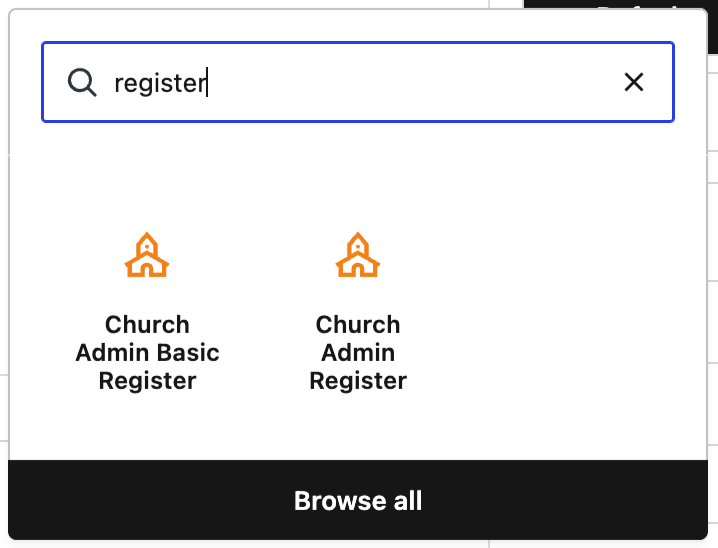
Add the shortcode to any page, or, if you’re using the block editor, insert the Church Admin Register block instead.
What visitors see
Once the page is published, a website visitor who isn’t logged in is presented with the following:

This is so the plugin can establish whether to show a registration form or a login form.

Spam protection
There’s basic spam checking built in — a hidden honeypot field that bots fill in and get rejected, and names that look like web addresses or spammy words are rejected too.
Confirmation and admin workflow
- Once someone registers, they receive a confirmation email. The admin also gets a copy, and can edit or delete the entry from there.
- After the visitor clicks the link in their confirmation email, the admin gets a second email, and can then create a user account for them, or edit or delete the entry.
Customising the fields
To hide the gender, custom, and date of birth fields, add an exclude parameter to the shortcode:
[church_admin_register exclude="gender,custom,date_of_birth"]
Use the shortcode generator in Church Admin → Settings to build this without typing it by hand.
Editing details after logging in
A user who logs in sees a household form, where they can edit the people in their household and the address details.

Premium — letting members opt into ministries and small groups
⭐ Premium
With the Premium Ministries and Small Groups modules active, you can add an allow parameter so logged-in members can opt themselves into ministries and small groups from their own edit form:
[church_admin_register allow="ministries,groups"]
These fields only appear when a logged-in user edits their own details — not during initial registration — to keep the sign-up form simple.